TURTLES IN CRISIS
Asian Turtle Crisis
According to the International Union for Conservation of Nature (IUCN) Red List, approximately 62.8% of chelonians (162 of 258 species) are either critically endangered (19.4%), endangered (17.4%) or vulnerable (30.0%). Tropical Asia is a biodiversity hotspot for turtles—more than one quarter of all turtle species on Earth are found here. The situation is particularly serious for Asian turtles, they were being harvested in large numbers to meet the demand for meat, use in traditional medicines and the pet market. All native turtles in Hong Kong are either critically endangered, endangered or vulnerable. Hong Kong is the last stronghold in the region where scattered populations of freshwater turtles still persist. Although the “Asian Turtle Crisis” was first recognised in the mid-1990s, the populations for most turtle species have further deteriorated over the past 20 to 30 years, and some species are now on the brink of extinction, so the timing and focus of this film is very important.
Freshwater Turtles in Hong Kong




Habitat
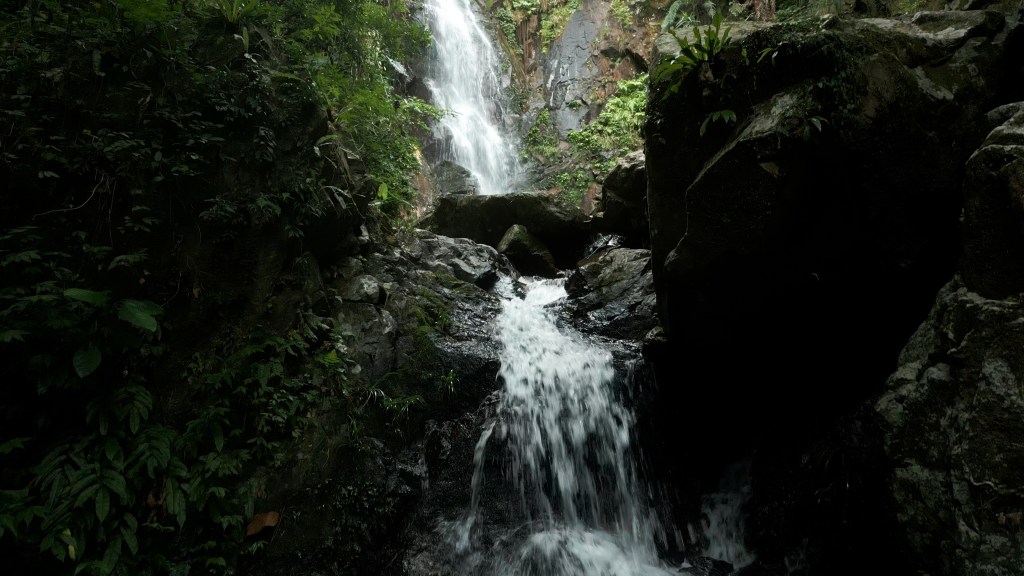
Turtles play an important role in the freshwater ecosystem, they maintain streams and rivers in a healthy condition and are essential in the energy and nutrient cycling of the ecosystem.
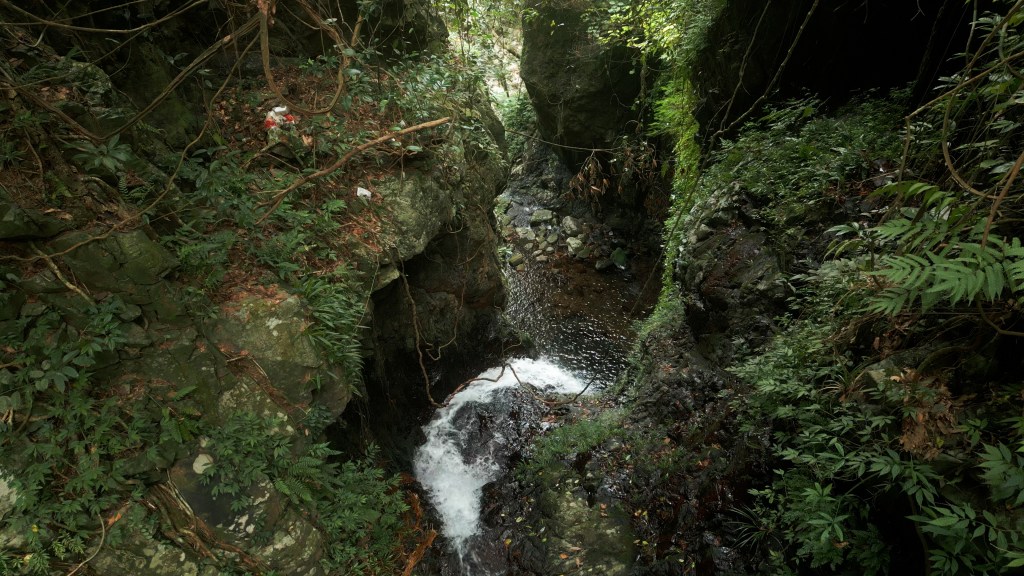
A highland mountain stream where freshwater turtles such as the Big-headed Turtle inhabit. Their strong claws and flat shell help them navigate these fast-flowing and steep streams.
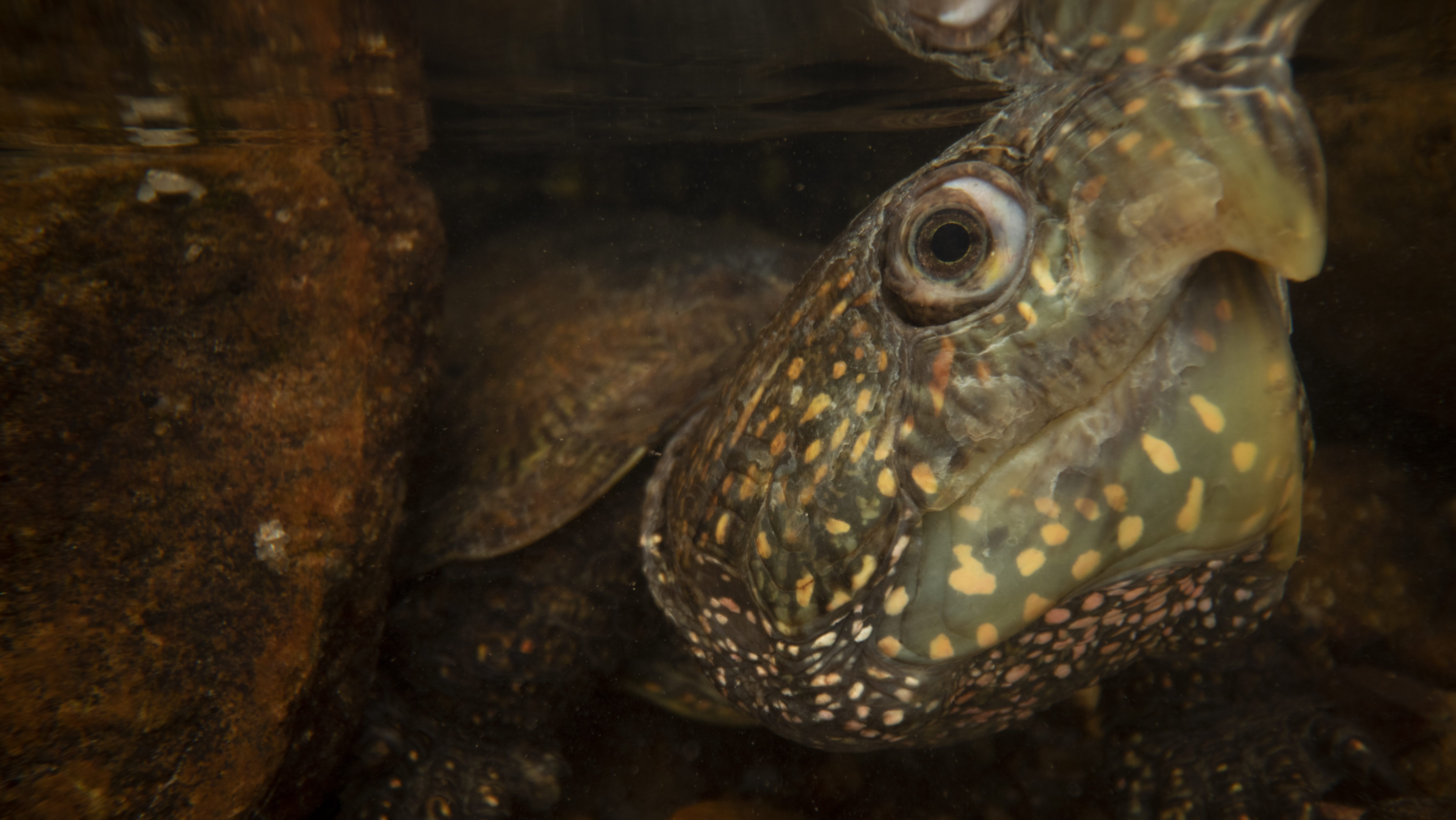
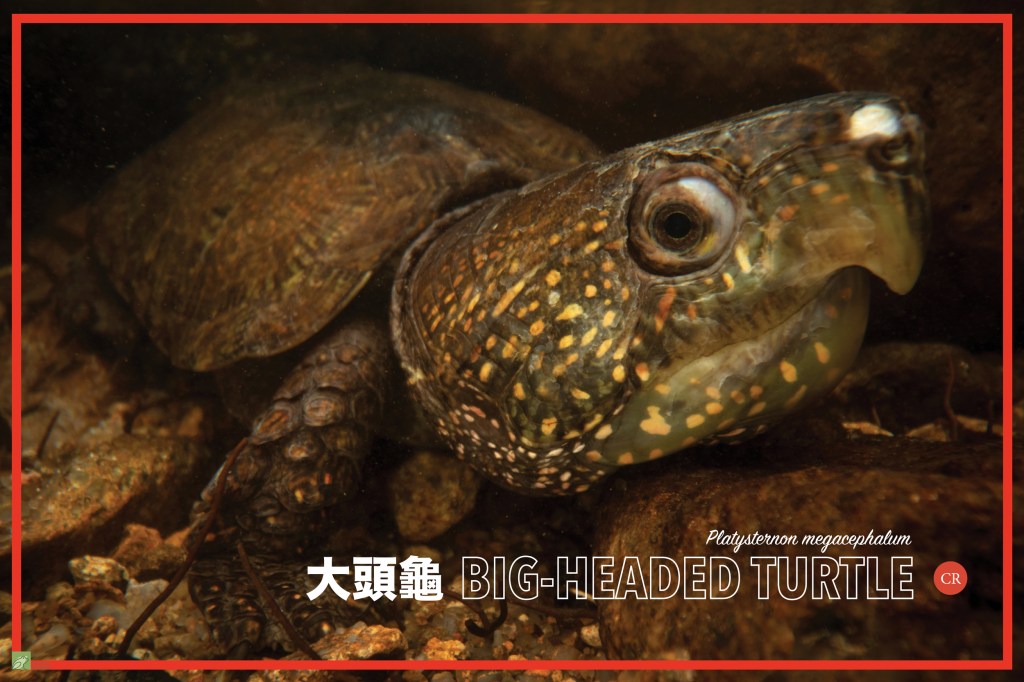
大頭龜 Big-headed Turtle (Platysternon megacephalum)
The Big-headed Turtle is distributed in Cambodia, China, Laos, Myanmar, Thailand and Vietnam. They used to be common in parts of their range, but are now rare in their range. They have been heavily hunted in many areas over the past three decades, and overall population trends are declining. Populations in Thailand and Hong Kong are considered stable, but are rapidly declining in other parts of the distribution. Big-headed Turtles inhabit steep, clear-water cascading streams in forested mountains at 100 to 800 m above sea level. They mainly feed on Machilus fruits, insects, fish, crabs and mollusks. A 2018 assessment listed the turtle as Critically Endangered, with a declining population due to residential and commercial development, freshwater aquaculture development, natural system modification, overexploitation of aquatic resources, water pollution, invasive species and illegal hunting.
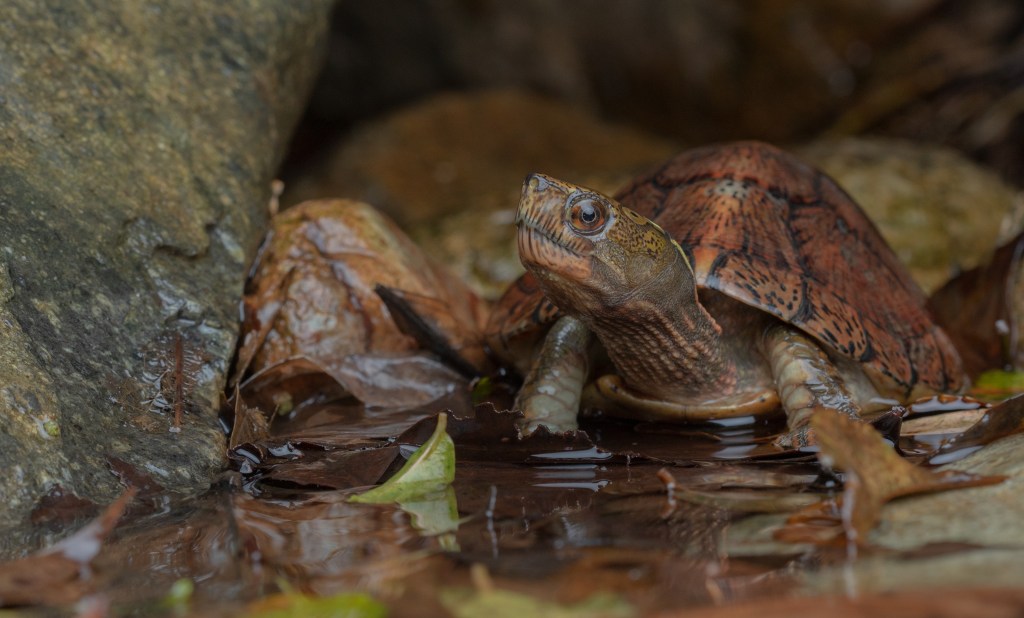
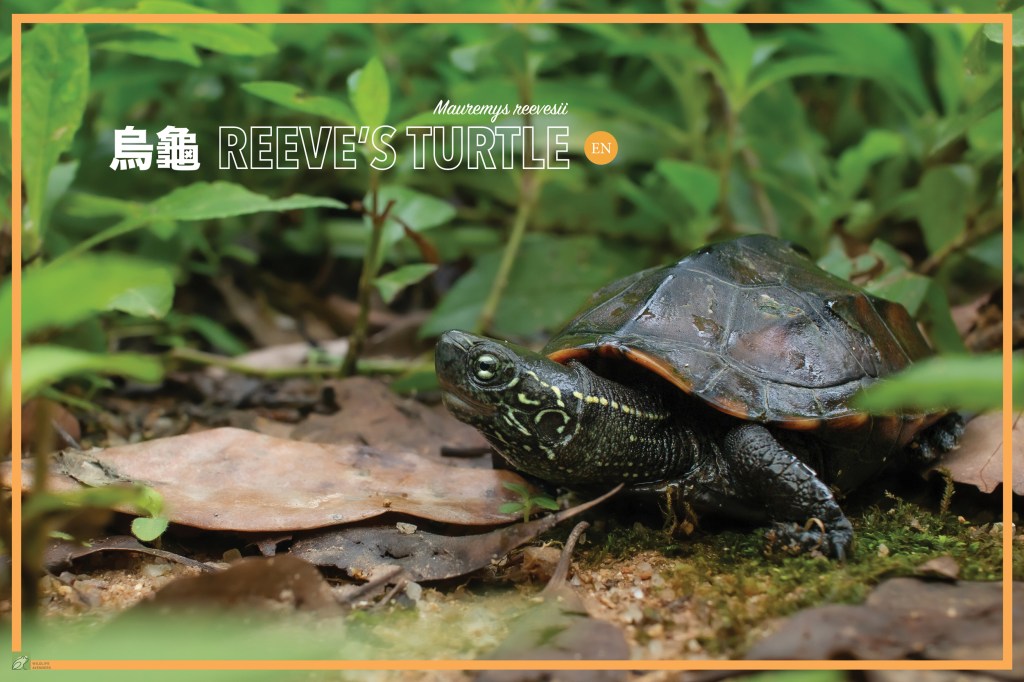
眼斑水龜 Beale’s Eyed Turtle (Sacalia bealei)
The Beale’s Eyed Turtle is endemic to China and inhabits mountain streams ranging from low to high altitudes, preferring slow, clear water. This timid species preys mainly on fish, insects, fruits and mollusks. Due to its narrow distribution and its rarity, the Beale’s Eyed Turtle is understudied, and other biological information remains to be researched. The species is currently listed as Endangered, but the last assessment of its conservation status was more than 20 years ago.
Illegal Poaching
Freshwater turtles’ slow maturation time makes them extremely vulnerable to multiple threats, including illegal poaching for the food and pet trade, habitat loss as well as climate change, and many of them of on the brink of extinction.
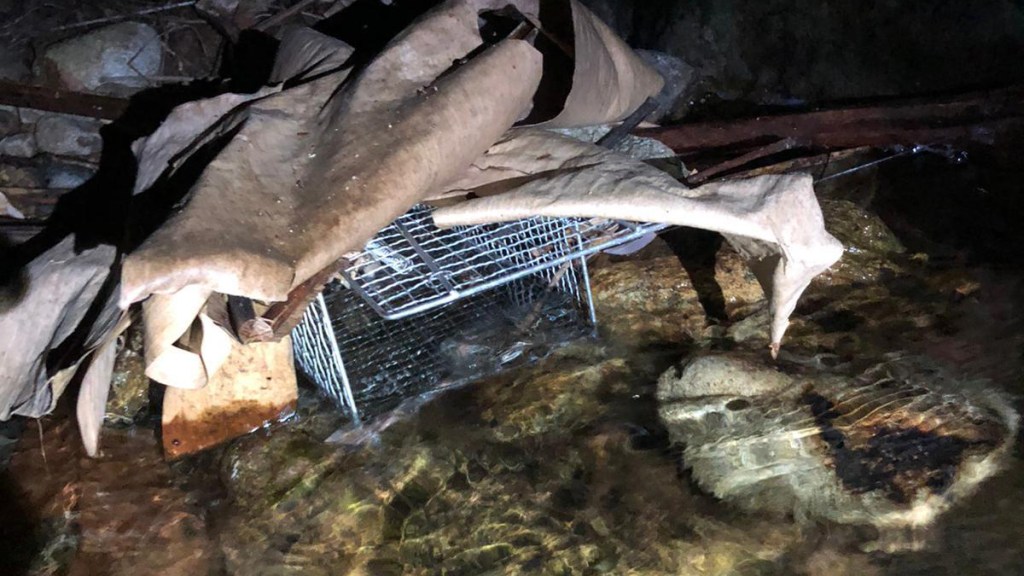
Traps with bait are left in streams the night before, and are usually collected the next morning.
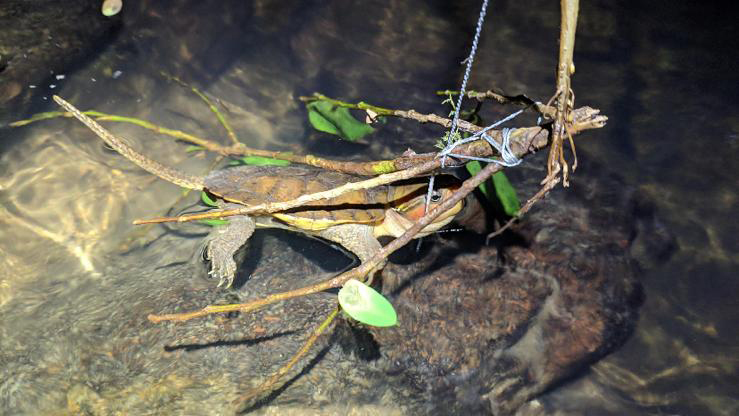
A less typical way of catching turtles: A juvenile Big-headed Turtle is caught by hook and line method.

Wild caught turtles are traded on social media and messaging apps. Sensitive and censored words such as “wild caught” or the price of the turtle are replaced by words that sound the same.
Pet Trade
Hong Kong is a leading trading hub for turtles and tortoises, 1 in 5 households that has pets keep turtles or tortoises. Locals flock to Goldfish Market in Mongkok every day, purchasing plants, fish, pets including cats, dogs, rabbits, geckos and turtles.
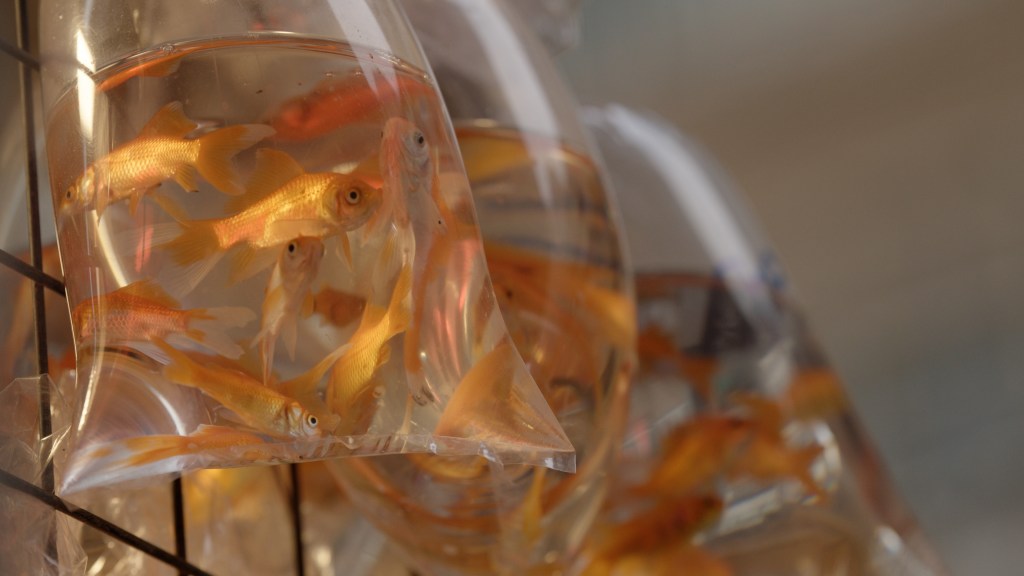

Turtles are kept in small containers, or in buckets, as people look on for rare and eye-catching species. Some turtle species or certain mutations can go for over thousands dollars.
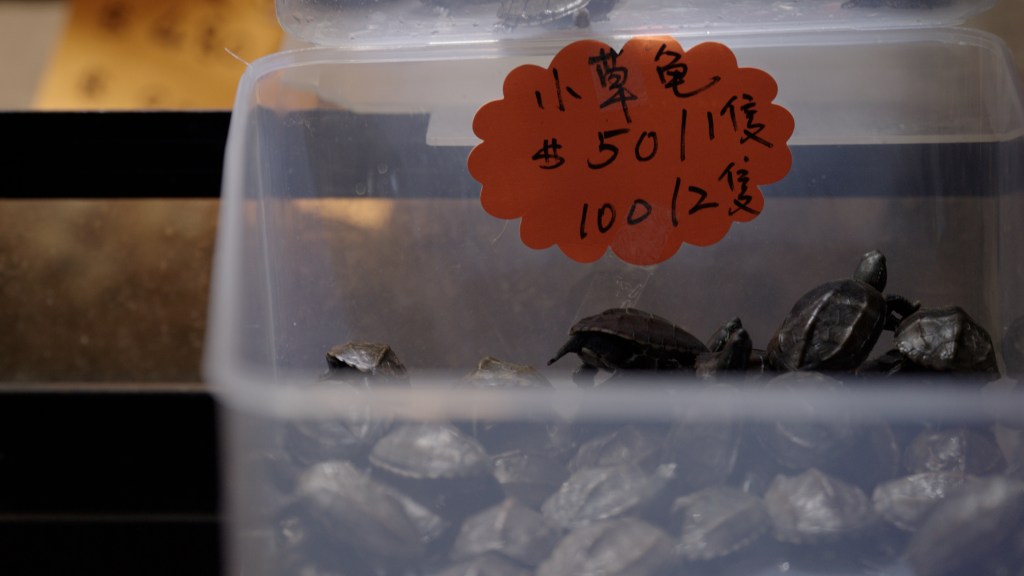
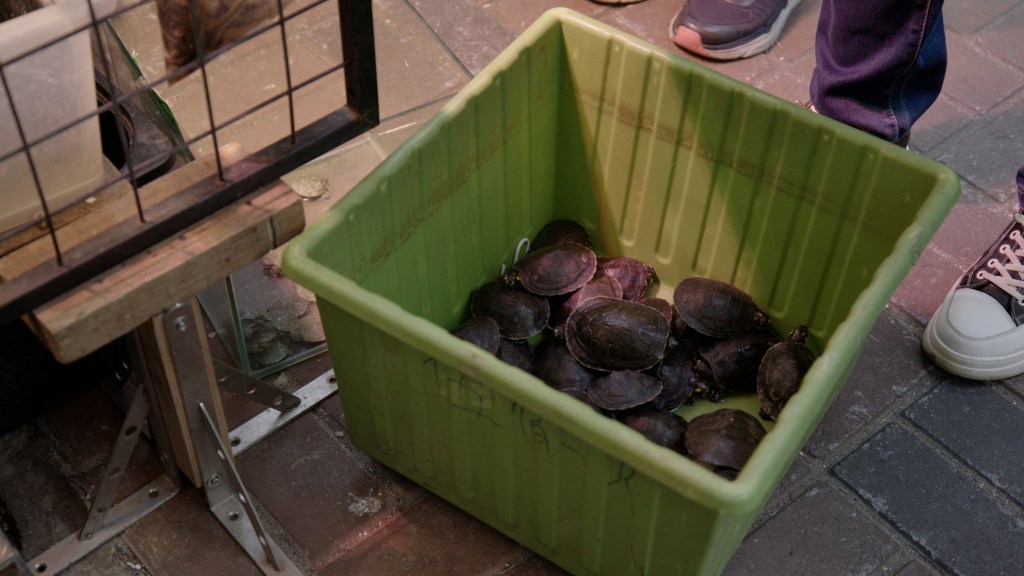
Chinese Medicine
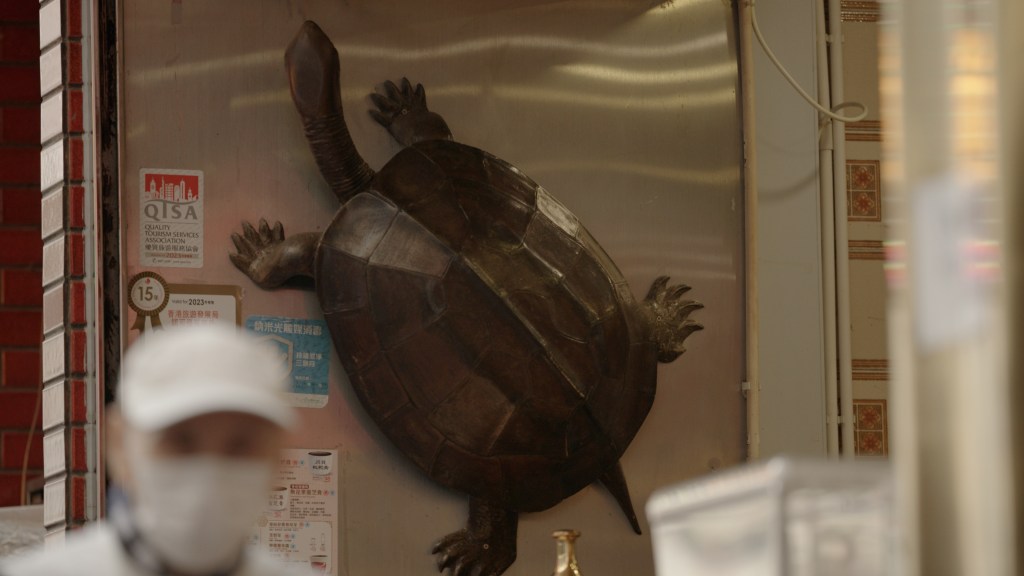
One of the oldest stores that sell Guilinggao, also known as tortoise jelly or turtle powder, in Yau Ma Tei in Hong Kong. The Chinese medicine was traditionally made from the paste of the plastron from the Gold Coin Turtle, also known as the Chinese Three-striped Box Turtle and a variety of herbal products. The Gold Coin Turtle is the rarest native freshwater turtle in Hong Kong.

Research & Conservation
At Lingnan University, Dr Sung Yik Hei’s team is the leading herpetofauna research and conservation team in Hong Kong. They are combating illegal poaching by installing infrared cameras overlooking streams to monitor poaching activities.
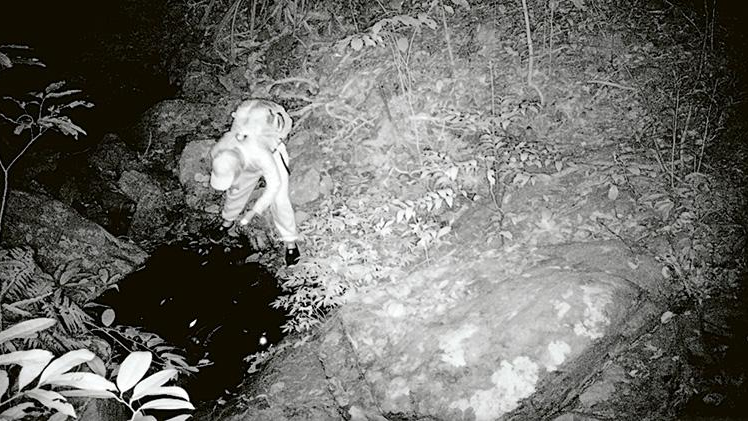
Poacher in stream, clothing suggests he is from the mainland.
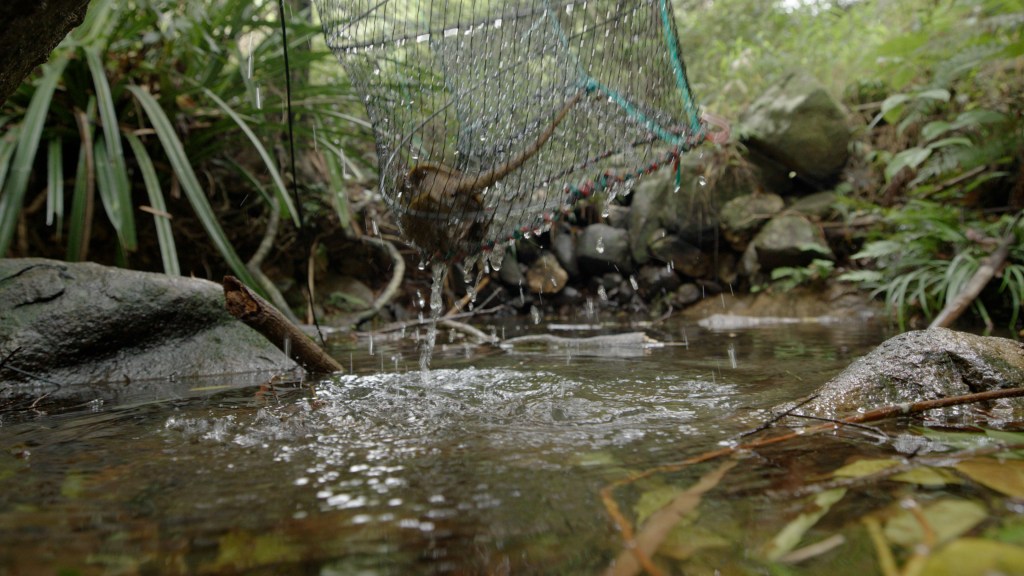
A big-headed turtle in a trap. Traps are left in the evening, and collected the next morning. This trap was left by Dr Sung Yik Hei’s team for research purposes.
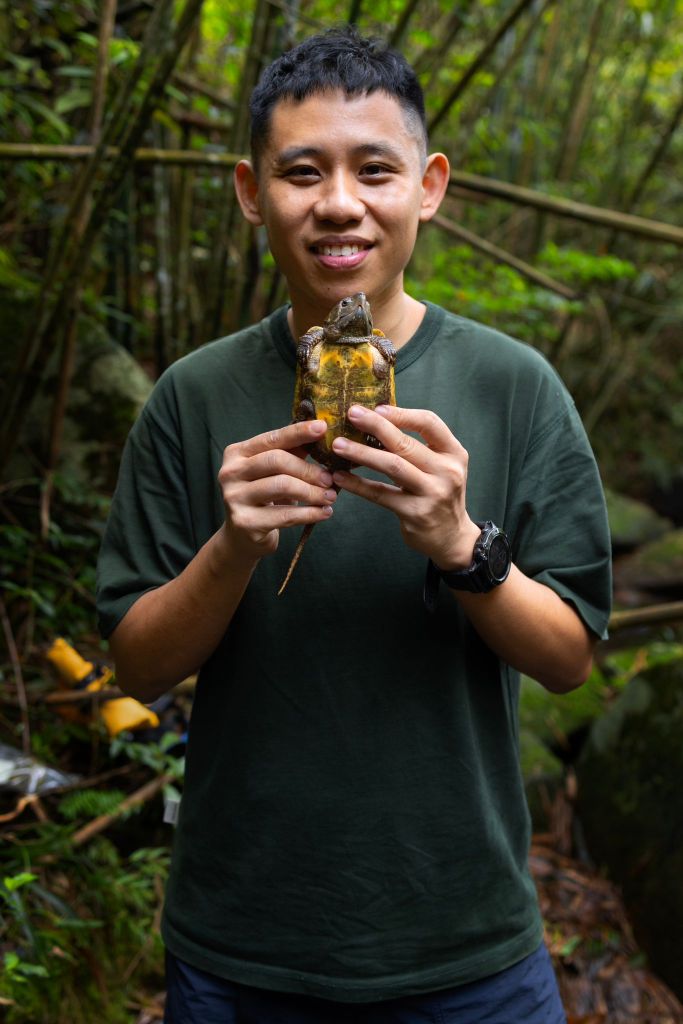
Dr Sung Yik Hei with a Big-headed Turtle
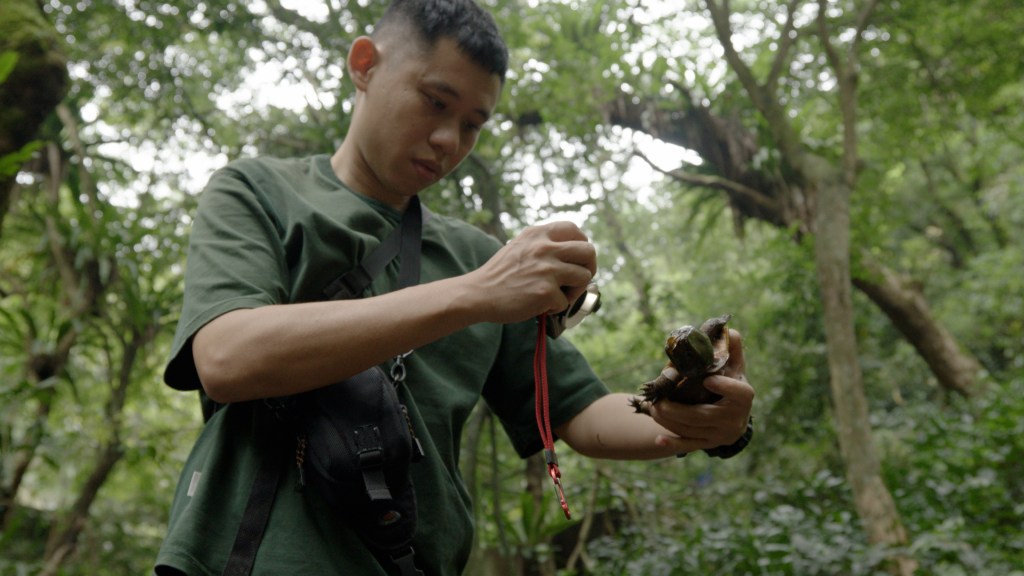
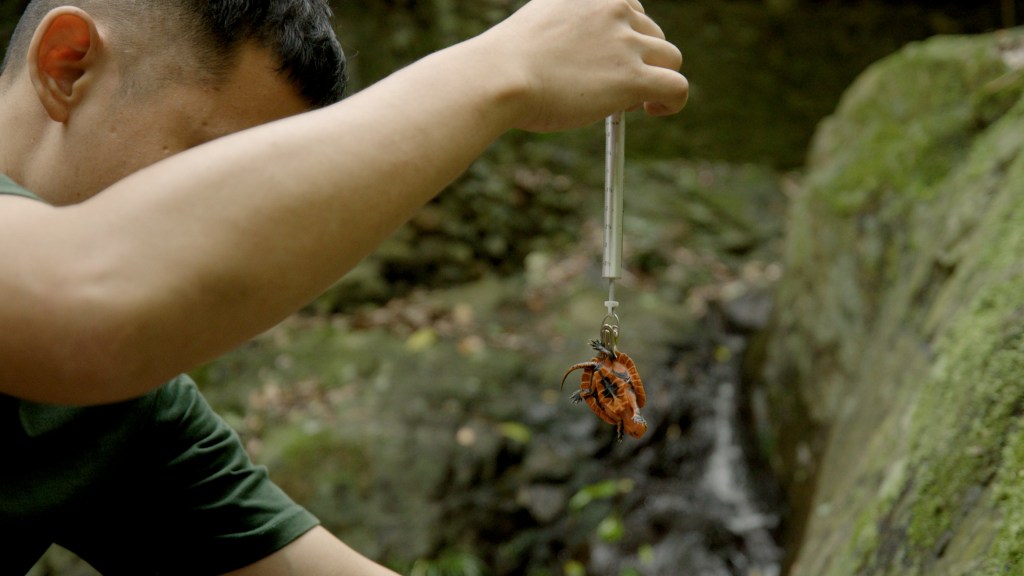
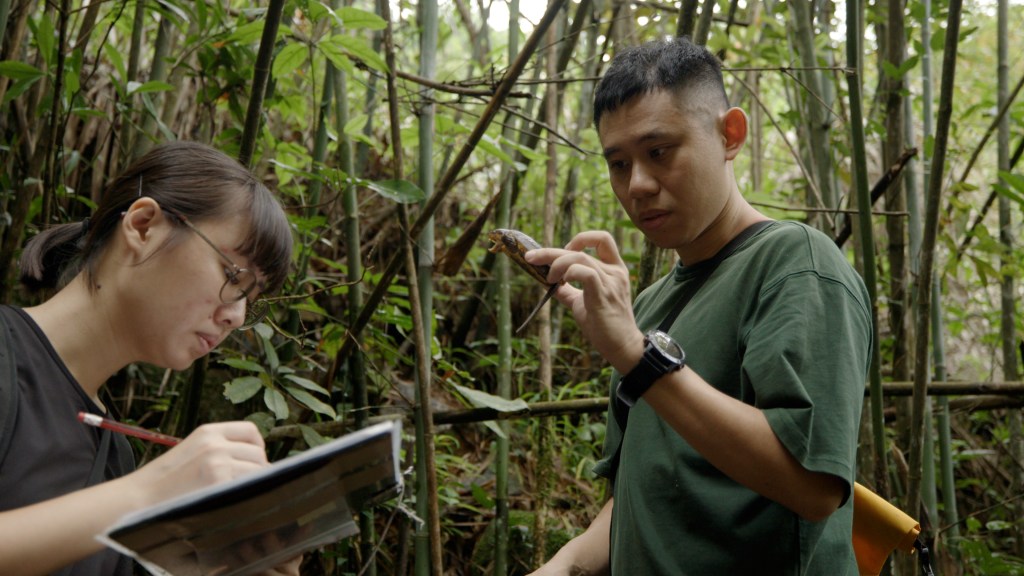
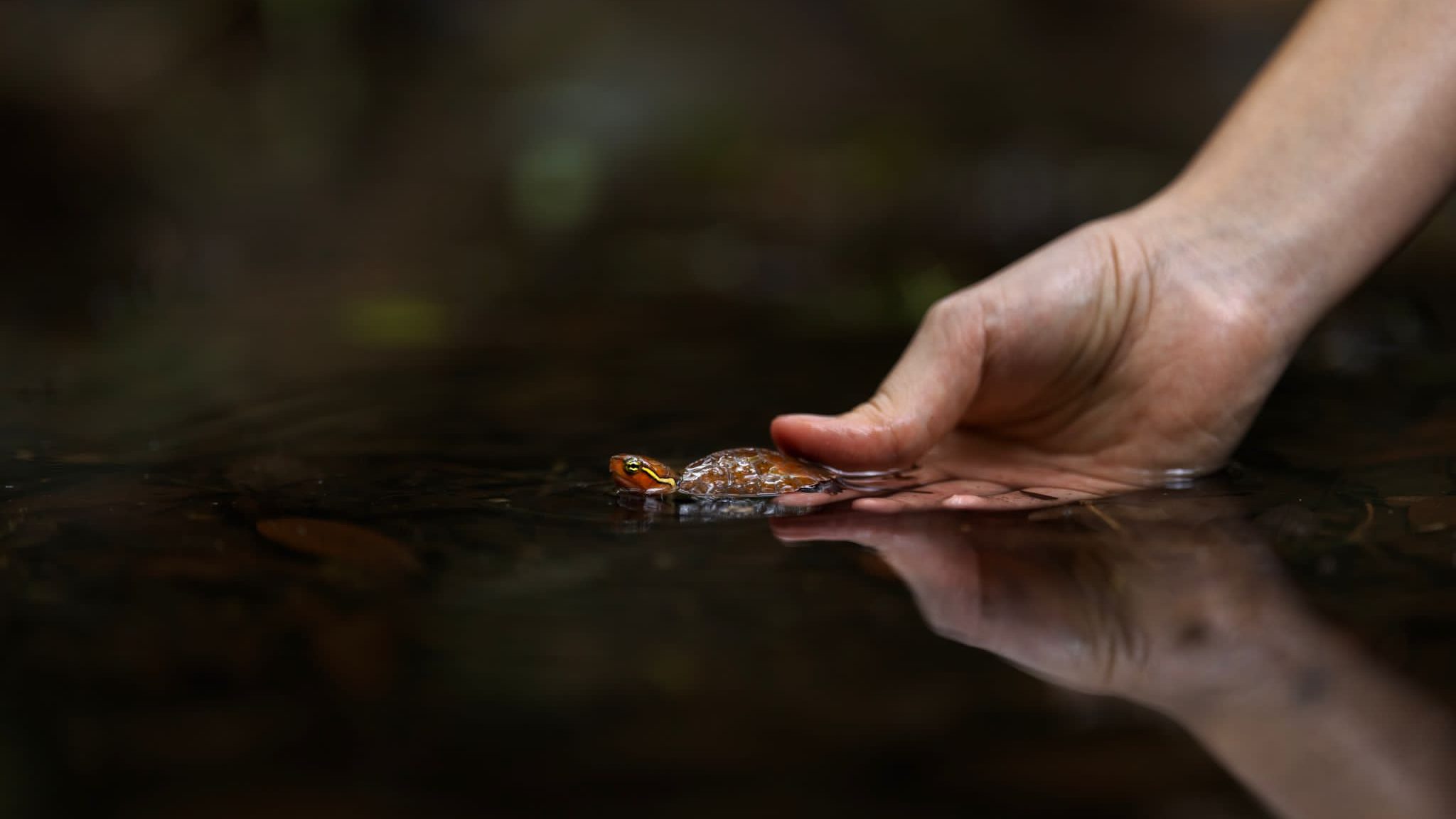
Hei and Hiu Ching working in the field, trapping big-headed turtles and collecting data as well as DNA samples. The turtles are released in the same location they are found.

Julia Leung, Dr Sung Yik Hei’s research assistant and student, is taking samples from a Chinese Softshell Turtle. She is also monitoring cases of illegal poaching closely.

三線閉殼龜 Three-striped Box Turtle (Cuora trifasciata)
The Three-striped Box Turtle is also known as the Gold Coin Turtle, and is endemic to China. At present, it is mainly scattered in southern China, Hainan and Hong Kong. Historically, they may have been fairly common in suitable habitats, but in recent years, due to overhunting, any remaining subpopulations have been reduced to discrete individuals. The wild populations in Guangdong, Guangxi, and Fujian provinces are nearly extinct. Based on this, their population is estimated to have decreased by more than 95% over the past three generations. The Gold Coin Turtle inhabits the clear streams in forest-covered mountains and feeds on a variety of small animal prey, as well as some plants and fruits. Due to residential and commercial development, freshwater aquaculture development, over-exploitation of aquatic resources, invasive species and serious illegal hunting, the Gold Coin Turtle was assessed as Critically Endangered in 2018, with its population declining.
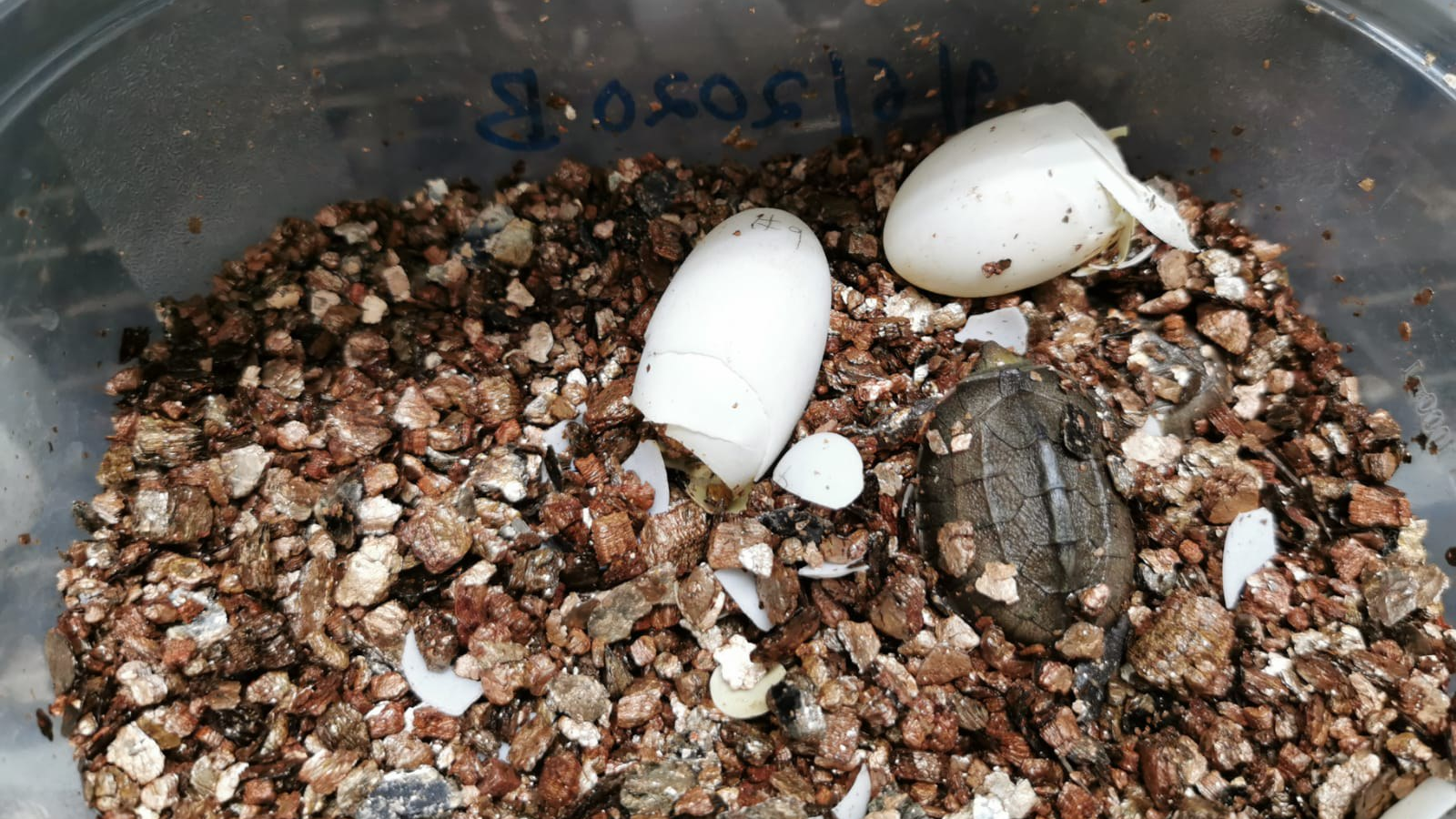
Kadoorie Farm and Botanic Garden is doing important ex-situ conservation work on the Gold Coin Turtle. They are building an assurance colony of rescued animals that have entered their ex-situ breeding programme. Future releases will aim to boost remnant populations and repopulate suitable habitats.
 DAPHNE WONG